
A New Atom in the “Leadership Molecule:” Meet Board Chair Joe Kanfer
On January 1, 2026, Joe Kanfer became Board Chair at Leading Edge. Joe brings to his new role a distinguished record of entrepreneurial leadership, philanthropic innovation, and deep commitment to Jewish communal life.
As former CEO and now Venturer at GOJO (inventors of Purell®) and a venture investor in Israel, Joe Kanfer has built and sustained a culture of excellence. In the Jewish nonprofit sphere, he has served in lay leadership roles including Chair of the Jewish Federations of North America, Chair of JESNA (Jewish Education Service of North America), Founding Chair of Honeymoon Israel, and Board service with many Jewish organizations. He also provides philanthropic leadership via the Lippman Kanfer Philanthropies.
With this breadth of experience, Joe is exceptionally well‐positioned to steward the Leading Edge Board at a moment when the sector is wrestling with generational, geopolitical, technological, and economic change, and is facing not only challenges but also real opportunities. We spoke with Joe about his background, his vision for Leading Edge, and the future of the Jewish nonprofit sector.
What’s the “Big Why” that motivates you to be engaged in the Jewish nonprofit world?
My “why” starts not in the nonprofit world but in Jewish life. I fervently believe that Jewish wisdom, and what I call “the Jewish operating system” is something that can promote human flourishing. I believe Jewish wisdom can contribute to a better world.
Is there a particular piece of Jewish wisdom that comes to mind for you as especially important to the current moment?
We’re at a point in time when “dan lekhaf zekhut” — giving others the benefit of the doubt — is critically important. Honoring multiple truths is a basic tenet of Judaism. The story of Hillel and Shammai, the announcement by God that both of their opinions, though widely different, have elements of truth, and the way Hillel would listen to, grapple with, and repeat the views of the school of Shammai teaches us that to respect diverging and dissenting opinions goes a long way toward finding the best solutions.
It is this process that is important. It’s one thing to admit that there are different views, it’s quite another to give others the benefit of the doubt and really listen to them. After all, we’re a people that calls upon ourselves first and foremost to “shema,” listen.
But then, at the end of the day, after listening and processing, we still have to move on. Once we’ve heard, we still have to choose a path. We learn that the path of Hillel was most often chosen because he was a good listener, because he started by giving others the benefit of the doubt.
When you think about your role models, either in business or in Jewish life, who stands out and what did you learn from them?
My role model was my uncle, Jerry Lippman, who got me involved in Jewish life. He was a 10th-grade dropout, had dyslexia, and couldn’t read Hebrew. But he had a Yiddishe neshama [Jewish soul] and that expressed itself not only in a love for the Jewish people and a love for Israel, but a love for others outside the Jewish community as well. He treated everyone with respect. And he wasn’t afraid to say that it came from his Jewish values. He used to say, “Everything I learned, I learned from someone else.” That was his translation of Pirkei Avot [6:6] for the general population. In our company that he founded, he made everyone feel important, and he openly and proudly credited Jewish wisdom and Jewish ideas.
Thinking back to when you were new to leadership, what has changed between your leadership style then and your leadership style now?
I think in my early days, my energy sometimes caused me to move too quickly, and not to be the listener that I just expressed a few minutes ago. I was young, and I got involved very early. I was already running a company in my early 20s, and I was leading a Jewish day school that was in some financial difficulty. And I sort of thought I knew everything.
But over time I learned the power of leading with a team, what I call the “leadership molecule.”
If you’re thirsty, oxygen won’t do you any good and hydrogen won’t do you any good, but put them together your thirst will be quenched. I learned that in leadership, no one’s the Moshiah [messiah], no one is the unicorn who can do it all. It really requires leading with a trusted team of people with complementary skills.
Nonprofits and for-profit businesses have many differences, but they have commonalities as well. Are there lessons you learned in the business world that feel relevant and important for the Jewish community at this moment?
I honestly will tell you: I don’t see much difference. People are people. We want meaning in our work. We want to accomplish something relevant. We want to belong and work together. The business world and the nonprofit world converge in their needs to perform with excellence and to succeed and be self-sustaining.
What first motivated you to get involved with Leading Edge?
I have always been a believer in building what I call “foundational capability.” The Jewish communal world has extraordinary institutions filled with people who want to do amazing things. The question is, how do we bring more innovation and excellence to the whole field of nonprofit Jewish work? How do we capitalize on and harness the talents of so many committed Jewish professionals so that the whole Jewish nonprofit field is greater than its parts. What foundational capabilities does it take to do that? The Leading Edge mission uniquely understood that. It seemed like a tremendous opportunity to enable that talent. Leading Edge is about leverage — we are taking what’s already there and multiplying impact. And Leading Edge is in a unique position to advance the whole system. We’re not only about building better, more vital organizations. We’re about building a field within which professionals can navigate, find their passions, use their expertise, find meaning and grow. Leading Edge presented an unusual opportunity to contribute to Jewish life.
As you enter your chairship — understanding that it takes a “leadership molecule,” not just one person — what kinds of impact do you personally hope to make on the organization?
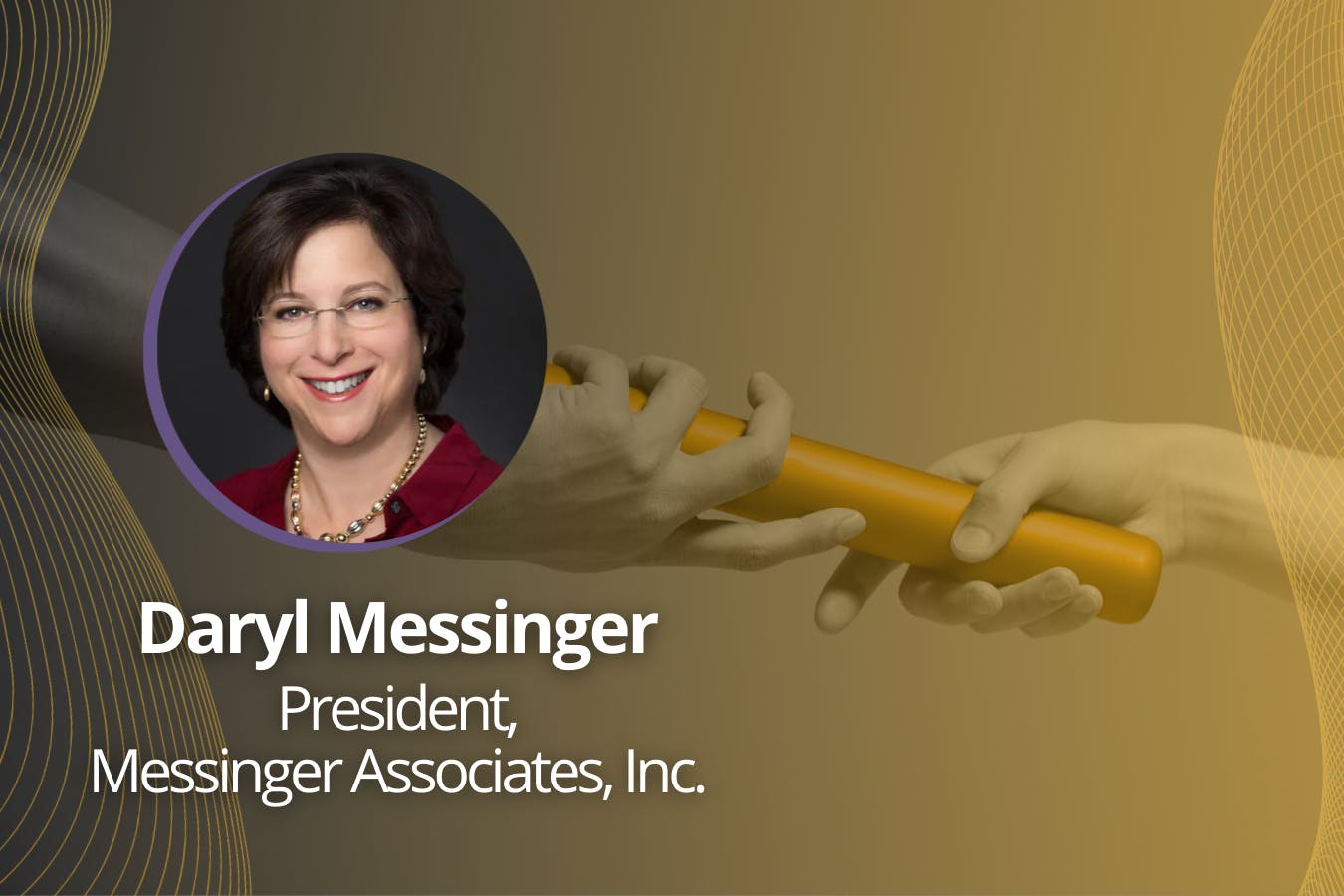
Leading Edge has a fabulous professional staff. The ten years since inception under the powerful leadership of Gali Cooks has been a case study in how a new organization can achieve its founding mission and also, in the face of extraordinary challenges in the Jewish world, dramatically expand its scope and impact. And Leading Edge has an outstanding Board with enormous experience and the courage to tackle the big issues. The last three years under the insightful and I might say exquisite guidance of Daryl Messinger has seen the realization of Leading Edge as the central address for talent and culture in the Jewish nonprofit field. My job is to maintain this extraordinary momentum and be a catalyst, an agent that helps Leading Edge help the Jewish nonprofit field reach potential. It will be my job to lead the Board in a way that makes sure that the Board supports the staff and contributes to both strategic and generative thinking. There’s a lot of talk these days about reacting with “resilience,” but the concept I find more compelling and proactive is “emergence.” I want to see us continue to emerge as the dynamic organization that drives the field forward. And that means keeping one eye on accomplishing the strategies that we set and the other eye on innovating to meet the constant change in the environment.
Leading Edge is now ten years old. What is the most important change or trend that the Jewish community has seen over this past decade that will shape our future?
I’ve been around long enough to know that generational change sneaks up on us slowly, but it’s there. The last ten years have seen different experiences with Israel and the attendant stresses, the surfacing of antisemitism and challenges to our safety and the ongoing challenge of maintaining Jewish coherence in an open society. But we have also seen more entrepreneurism in existing and new organizations, an increase in access to Jewish learning, more and more tailored opportunities to participate. The chance to create richer Jewish life is real. Ḥiddush, the Jewish call to innovation, needs to be central to our work. The Tosefta teaches that every Jew is born to add at least one new insight, ḥiddush, in their lifetime. Leading Edge is clearly doing its part. I hope to add mine.
About the Author

Leading Edge mobilizes Jewish organizations to become places where great people deliver great impact.

Loading footer...